Skip to contentSkip to sidebarSkip to footer

Your engine bay doesn’t get opened very often, so over time, dirt, grease, and grime collect there. Services like oil changes or coolant flushes can leave spills behind as well.
Cleaning the engine bay is safe on most modern engines, as long as the sensitive parts are covered and the water is sprayed from a distance. Here’s how to properly clean your engine bay from start to finish and get it looking like new again.
Why detail your engine bay
It really comes down to maintenance and appearance. When the engine’s clean, you don’t see all the dirt and grime, and a clean engine bay makes any issues or leaks easy to spot. It also shows you care for your vehicle, and if you ever sell it, having the engine bay already clean is a good sign.
Is it safe to clean your engine bay?
Yes, it’s safe on most modern engines. Engines today aren’t built the way older ones were.
Many engines from before the 2000s used a part called a distributor, and getting it wet without covering it first could cause problems. That’s where the old “never wash your engine” warning comes from. Most engines today have a separate coil for each spark plug instead, so there’s no distributor to worry about.
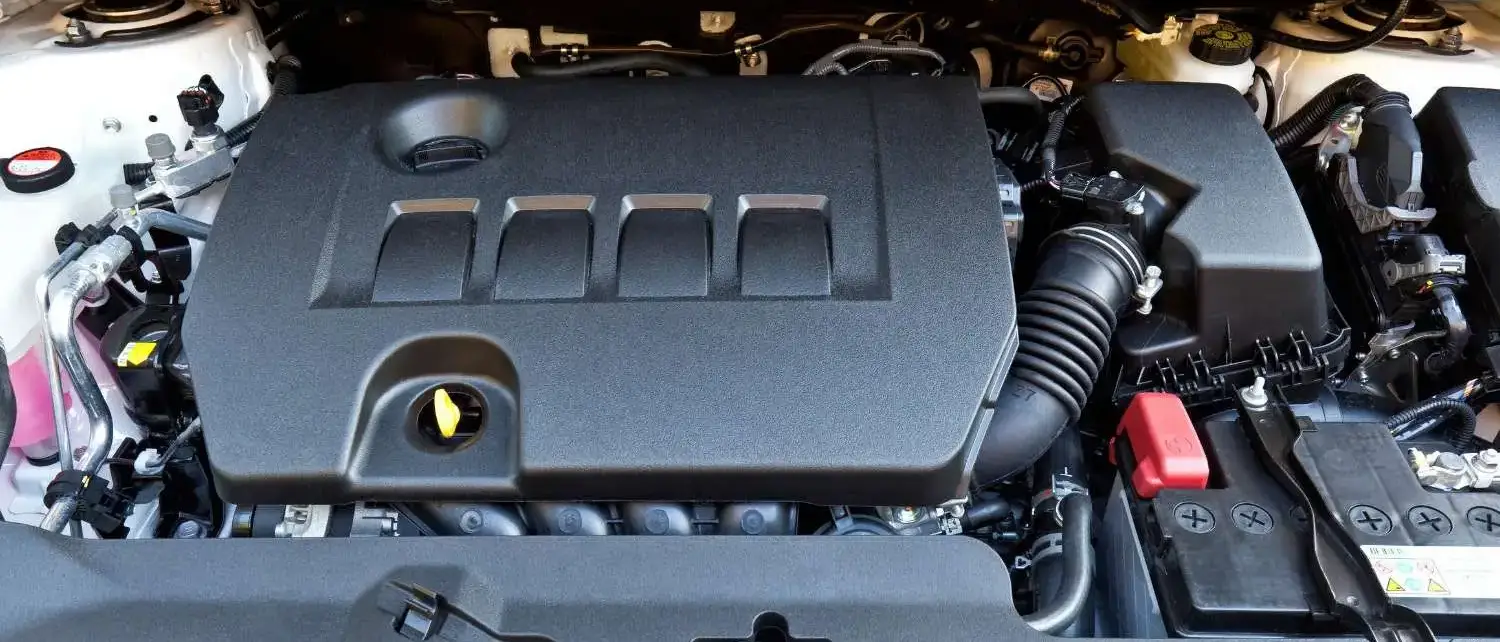
On top of that, most modern cars have an engine cover, and the connectors, along with other sensitive parts, are sealed and better protected than they used to be.
What you want to avoid is forcing a hard stream of water or product into the wires and connectors. Spray from a distance, and cover the battery, the alternator, the air intake, and any exposed electrical connections before you start.
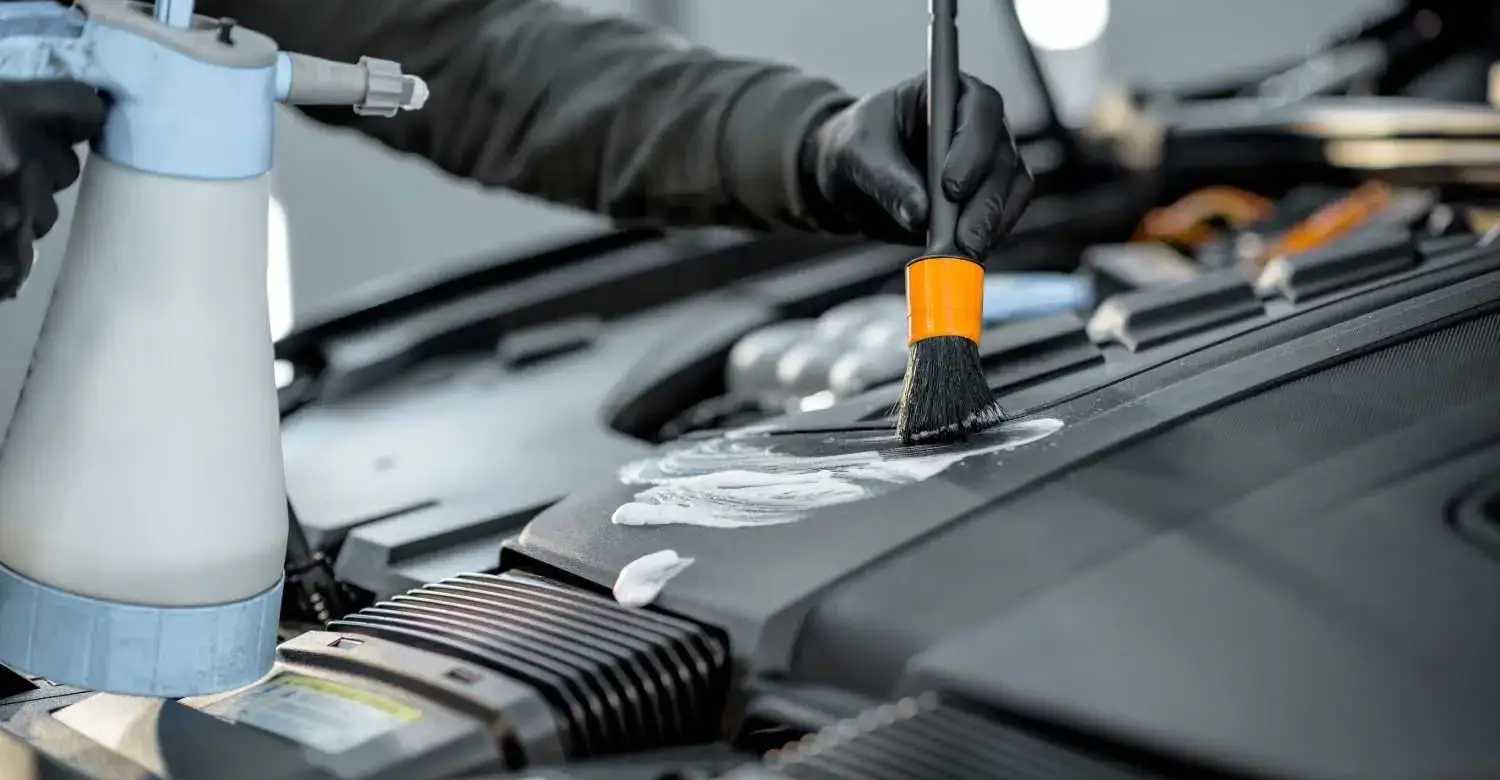
What you’ll need for engine detailing
- Engine degreaser: made to break down the oil, dirt, and grime in an engine bay.
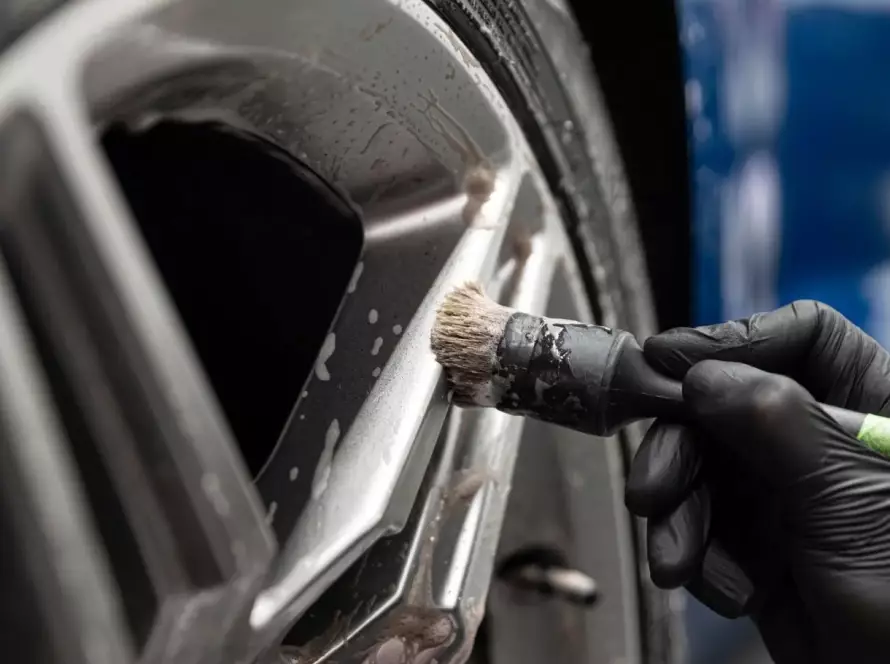
- Detailing brushes: a wheel well brush, a long-bristle brush, and a short detail brush.
- Plastic bags: to cover the sensitive parts before you spray and rinse.
- A pressure washer or a garden hose: to rinse off the dirt and degreaser.
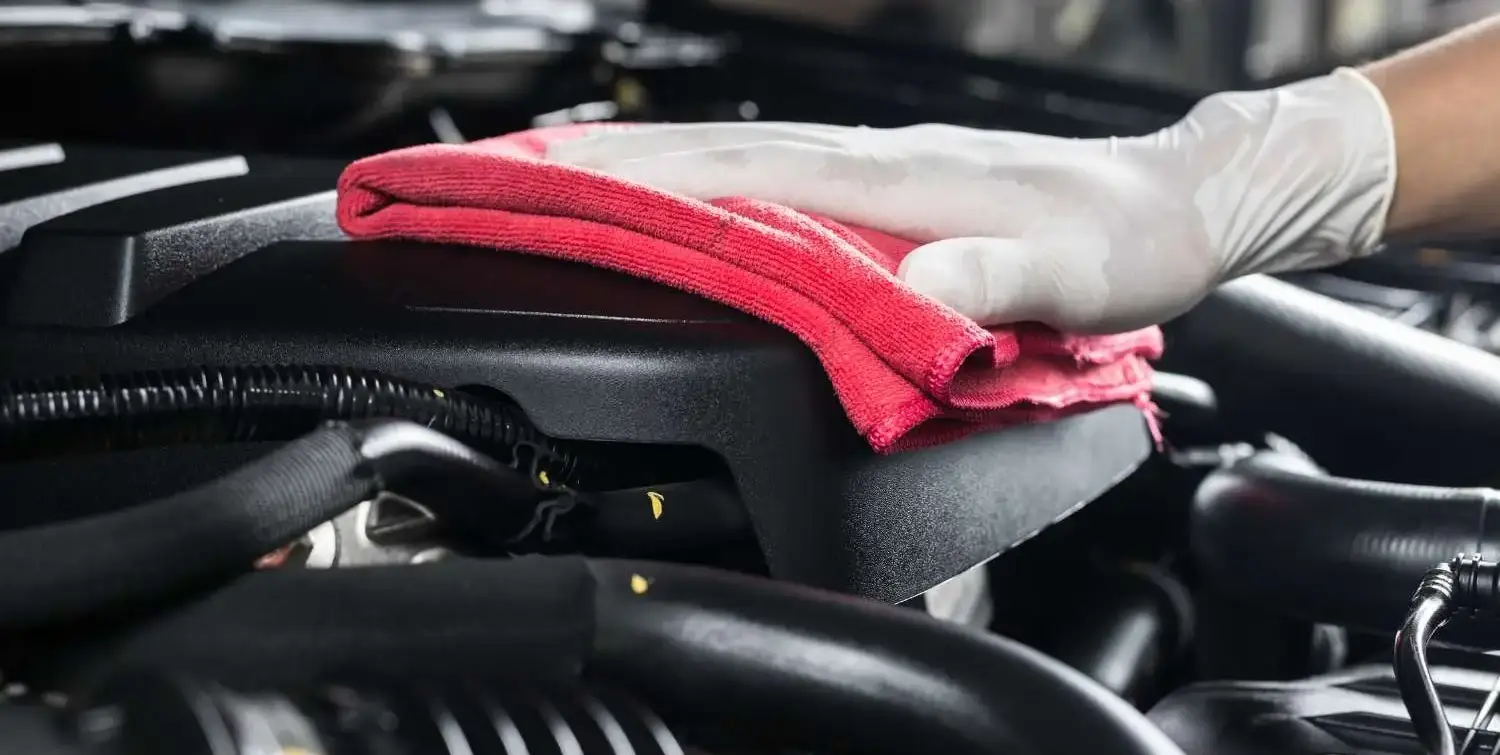
- Microfiber towels: for wiping down and drying.
- Compressed air or a leaf blower: to blow off the water after you rinse.
- Engine dressing: the finishing touch. It protects the plastic and rubber and makes your next clean easier.
Step-by-step guide to cleaning your engine bay
Prep the engine
- Wait until the engine is cool to the touch before you start.
- Blow out, brush, or vacuum any leaves and loose debris while everything’s still dry.
- Cover the battery, alternator, air intake, and any exposed electrical connections with plastic bags.
Clean the underside of the hood
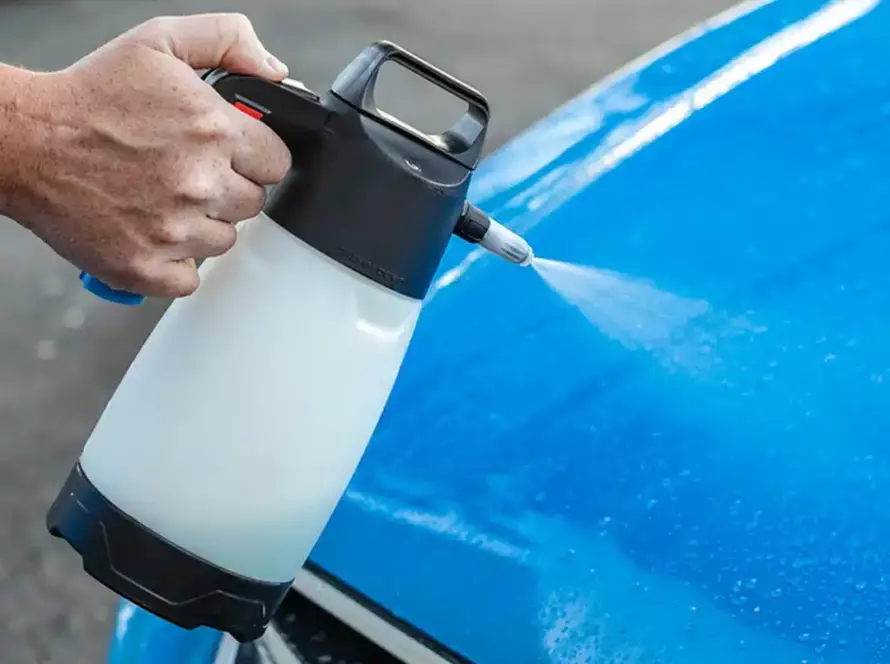
- Spray the painted surfaces under the hood with degreaser, agitate, and rinse lightly.
- Wipe the insulation pad with a damp microfiber towel and a little degreaser rather than soaking it, as it can hold a lot of water.
Pre-rinse
- Lightly rinse the entire engine bay from a distance. Skip this step if your degreaser needs to be sprayed on a dry engine.
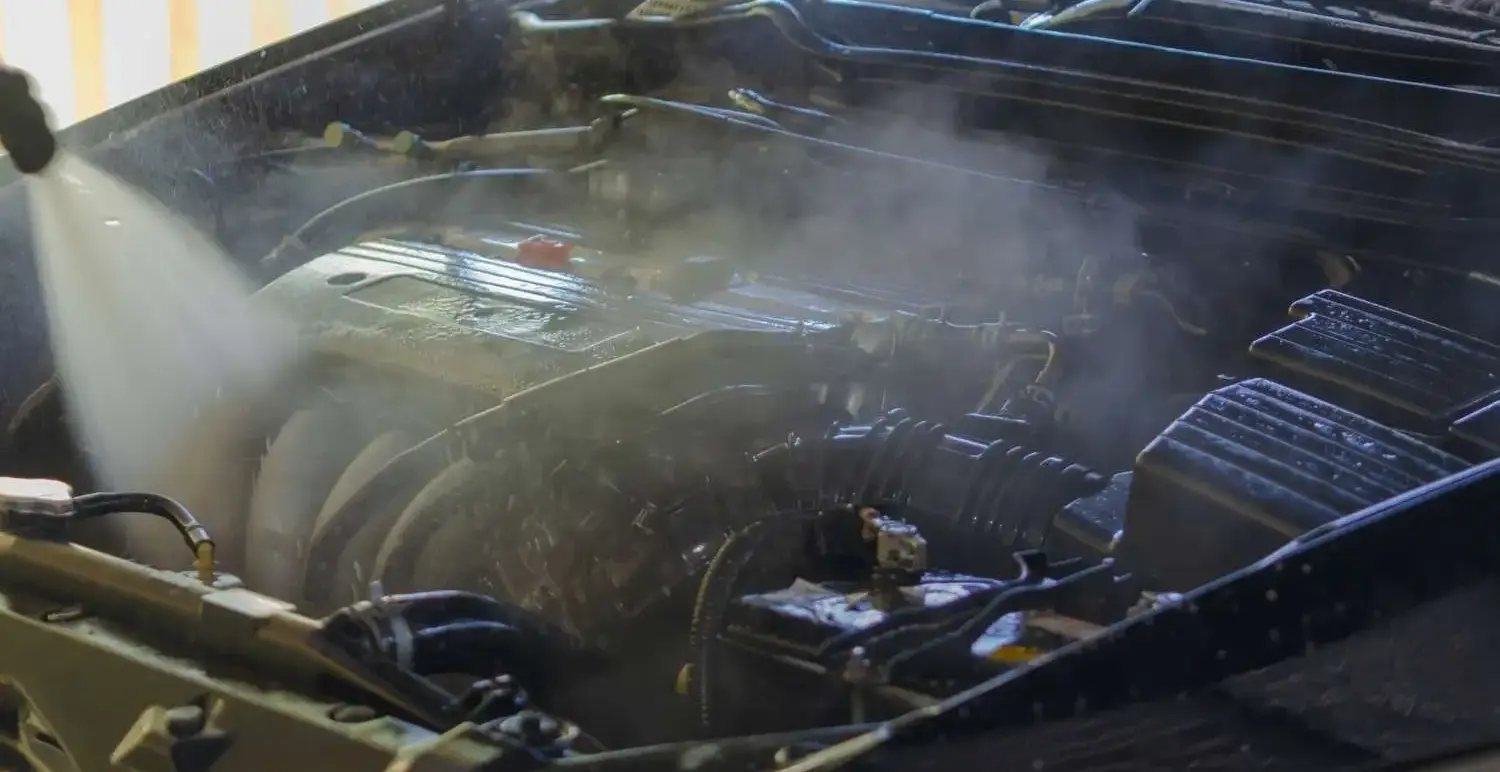
Apply the degreaser
- Spray the degreaser over the whole engine compartment, getting into the gaps and crevices.
- Let it dwell for a few minutes, but don’t let it dry on the surface.
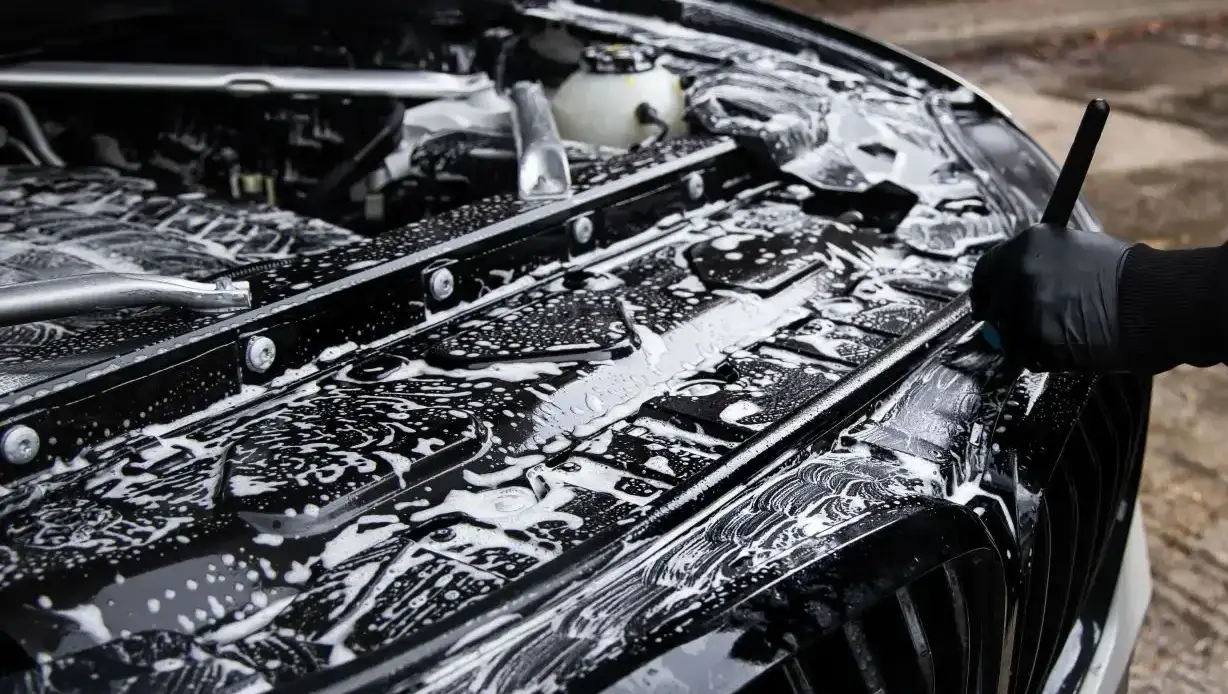
Scrub the bay
- Work through the engine bay one section at a time, using the wheel well brush on the bigger surfaces, the long-bristle brush in the hard-to-reach areas, and the short detail brush for the tight spots.
- Check it from different angles to make sure every area is thoroughly clean.
Rinse it off from a distance
- This is the part people get wrong. Don’t blast water directly into the engine. Stand back far enough that the water isn’t forced into the parts, but close enough to rinse off the dirt and degreaser.
- Even with the bags on, avoid spraying the covered parts directly.
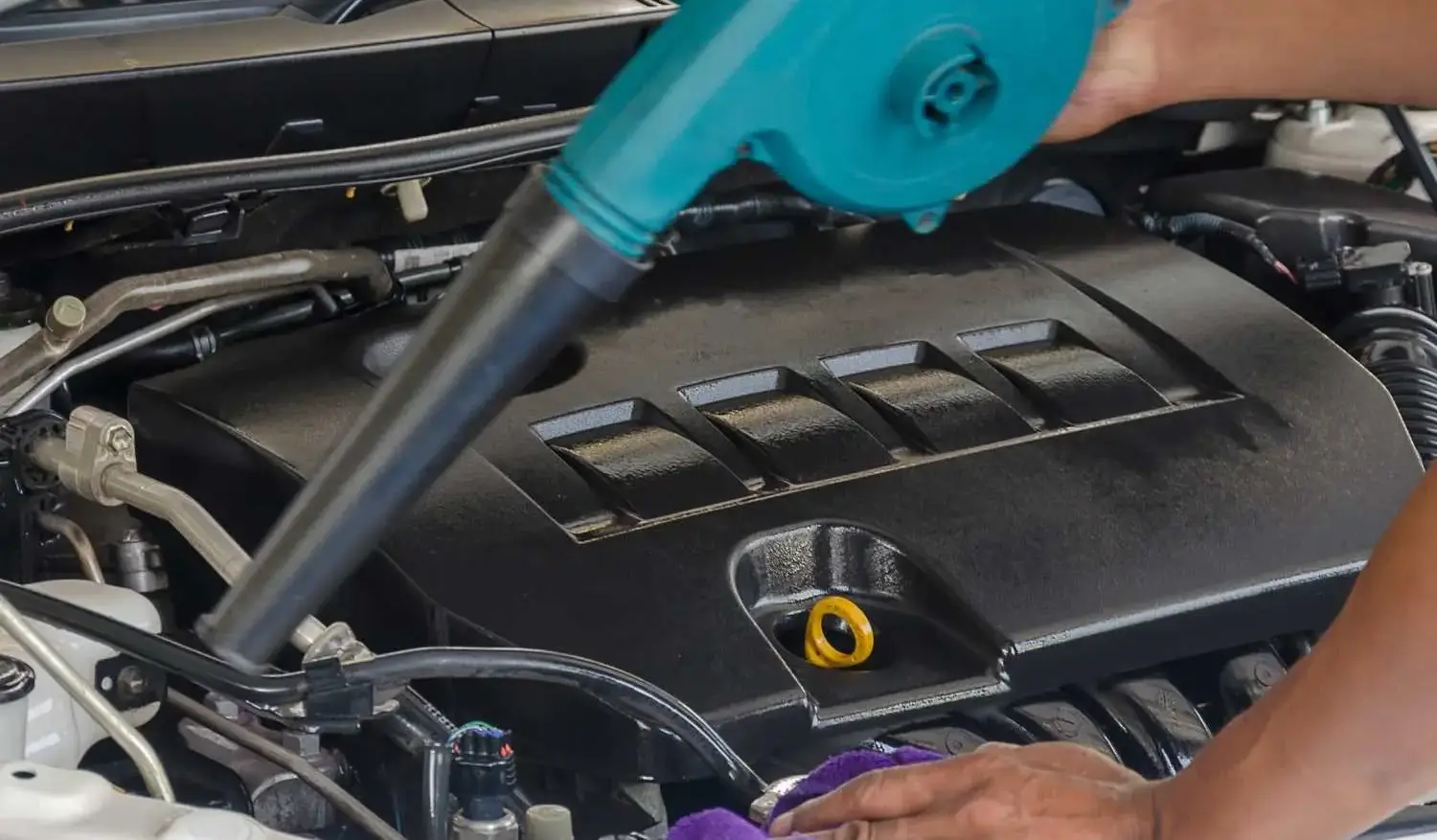
Dry the engine bay
- Blow the water off with compressed air or a leaf blower, aiming it away from the engine components, not into them.
- Dab the water out of the nooks and crannies with a microfiber cloth.
Dress and protect
- Once everything is completely dry, spray engine dressing over the plastic and rubber.
- Wipe away any excess dressing for an even finish.
Finish up
- Remove all the bags. That’s it, you’re done.
What not to do
A few things to steer clear of:
- Cleaning the engine while it’s running or still hot. Turn it off and let it cool first.
- Spraying water, degreaser, or dressing directly into sensitive parts, such as the electrical components, connector box, alternator, air intake, and belts. Keep your distance when you spray.
- Skipping the dressing at the end.
- Using dish soap, vinegar, or other household products. Stick to an engine cleaner or degreaser.
Keeping your engine bay clean
Once your engine bay is clean, a few things help keep it that way:
- Park in a garage or use a car cover when you can.
- Wipe the engine down with a microfiber towel every now and then to handle the dust between full cleans.
- After a car wash, open the hood and clear out any leaves or debris.
- Give it a light rinse and a fresh coat of dressing once in a while.
FAQs
How often should you detail your engine bay?
We recommend about once a season. If you drive a lot in the winter, or go off-roading or mudding, it’ll need to be detailed more often.
Can you use WD-40 to clean your engine bay?
No. WD-40 is a lubricant and water displacer, not a cleaner, although WD-40 does make a separate degreaser for engines. It’s best to use an engine degreaser.
Can you clean an engine bay without water?
Yes. For a newer or fairly clean engine bay, you can use a waterless wash. Spray the waterless wash across the engine the same way you would the degreaser, then wipe it down with a microfiber towel. Use compressed air to blow out any moisture in the hard-to-reach areas. If the engine is caked with grease and grime, it’ll need a proper engine bay cleaning.
Can you wash your engine bay at a car wash?
An automatic car wash can’t clean your engine. At a self-serve wash, you can clean it yourself with your own degreaser, brushes, and plastic bags.
How much does engine bay cleaning cost?
Most engine bay details cost around $50 to $150, depending on its condition.
How long does it take to clean an engine bay?
About 30 minutes to an hour. It can take longer if the engine bay is heavily soiled or if it’s your first time cleaning one.
Final Thoughts
Cleaning your engine bay is part of taking care of your vehicle. Take your time on the prep and rinse from a distance, and you’ll have your engine bay looking like new again.
If you’d rather leave it to a professional, engine detailing is one of the services we offer at Grandeur Autos.